Google AI Overviews and Fewer Website Clicks: What Should a Local Service Business Change Before 2027?
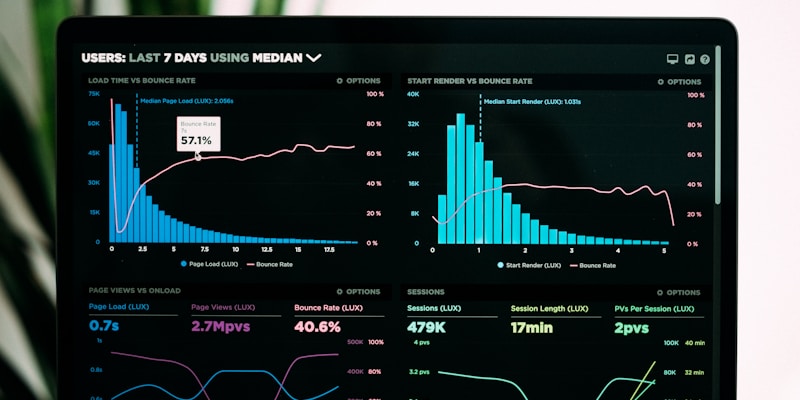
If your website visits are down but your Google rankings have not moved, the most likely cause is AI Overviews answering the question before anyone reaches your site. The practical response is not more content. It is to stop counting website visits as your enquiry pipeline, move the pages that earn a booking or a price enquiry to the front, and set your 2027 marketing budget on the assumption that informational traffic does not come back. That decision belongs in October, while you are still setting next year's numbers.
What Are AI Overviews Actually Doing to Your Traffic?
An AI Overview is the summarised answer Google now places above the normal results. For a question like how much aircon servicing costs, or how long a renovation permit takes, the searcher reads the answer and stops. Your page may still rank well. It simply no longer gets visited.
The loss is not spread evenly across your site, and that is the useful part. Three patterns show up again and again for Singapore service businesses:
- Explainer pages lose the most. Anything that answers what, why or how is now the raw material for the summary rather than a destination.
- Local intent still clicks. Someone searching for a plumber in Jurong or a corporate secretary near Tai Seng still needs to pick a business, but the click often lands on your Google Business Profile or Maps listing, not your home page.
- Action pages hold up. Booking, availability, price and quote pages survive because the searcher needs something from you that a summary cannot provide.
So the question is not whether you are losing traffic. It is which third of your site was carrying your enquiries.
How Do You Tell an AI Overview Problem From a Ranking Problem?
These two look identical on a traffic chart and need completely different responses. Google Search Console separates them in about twenty minutes.
Compare the last three months against the same three months last year and read three numbers together:
- Impressions holding or rising, clicks falling, click-through rate falling. That is AI Overview compression. You are still being shown, people are no longer clicking.
- Impressions falling and average position worsening. That is a ranking problem, which is an ordinary SEO job.
- Impressions falling with position unchanged. That is usually demand, seasonality or a competitor buying the top of the page.
Do the export now, not in January. Search Console keeps roughly sixteen months of query data, so the comparison you need for your 2027 budget starts disappearing month by month. Save the full query-level export to a spreadsheet you own.
Then tag each query as informational or transactional. If most of your lost clicks sit in the informational column, your enquiry engine may be healthier than your analytics dashboard suggests. If you are losing transactional clicks, that is a revenue problem and it is urgent.
Which Pages Still Earn a Click in 2027?
A page earns a click when the summary cannot stand in for it. In practice that means four things, and they are worth auditing against your own site this month:
- Real numbers. A published price, a rate card, a minimum job size, a callout fee. Vague pricing invites the searcher to accept whatever figure the AI quotes, which is frequently a competitor's.
- Availability and booking. Next available slot, December cut-off dates, a form that takes under a minute, a WhatsApp button that opens a conversation already identifying the service.
- Proof that is specific to you. Job photos with locations, named case studies, licence and registration numbers, insurance cover, years in operation. This is also what larger customers check before they shortlist you.
- Things only you can state. Your service area, your team size, your warranty terms, your response time. An AI summary will happily describe your industry. It cannot commit on your behalf.
Keep your explainer content, but demote it. Its new job is to earn a mention inside the AI Overview and to answer questions for people already talking to you, not to win visits.
What Should You Measure Instead of Website Sessions?
Sessions are now a weak proxy for commercial interest, and a business that manages to a weak proxy makes bad budget calls. Replace it with measures that survive the change:
- Enquiries by channel. Form, phone, WhatsApp, walk-in, referral, marketplace. If your phone and WhatsApp enquiries are not being counted, you are flying on a third of your instruments.
- Cost per enquiry. Total marketing spend divided by enquiries, tracked monthly. This is the number that tells you whether replacing lost organic traffic with paid search is affordable.
- Branded search volume. Searches for your company name. If this holds while generic traffic falls, your reputation is intact and the problem is purely distribution.
- Google Business Profile actions. Calls, direction requests and website clicks from your listing. For local service work this is often now the real front door.
What Can You Decide in October That Pays Back by February?
Four decisions, all of which fit inside a normal budget round:
One, fix the listing before the website. Correct opening hours including the December and Chinese New Year period, complete service list, current photos, recent reviews. This is free and it is where the clicks are going.
Two, make every contact path countable. A trackable number, a WhatsApp link per page, a form that records which page it came from. Without this you cannot tell a traffic drop from a revenue drop.
Three, set a 2027 assumption in writing. Plan on informational organic traffic being materially lower and not recovering. Then decide explicitly how the gap is covered: paid search, which costs money per enquiry, or owned channels such as your customer list, repeat work and referrals, which cost time. Both are legitimate. Leaving it undecided is not.
Four, start the owned list now. Customer contacts you hold yourself are the only distribution channel no platform can reprice. If you collect contact details, say clearly what you will use them for and keep the consent record, which is also what PDPA expects of you.
The businesses that will struggle in 2027 are the ones whose enquiries depended on being found by people asking a general question. The ones that will be fine are the ones that are easy to price, easy to book and easy to verify.
Frequently Asked Questions
Should we stop writing blog posts and guides?
No, but change the purpose. Content now works by getting your business named inside the summary and by answering questions for prospects already in conversation with you. Write fewer, better, more specific pieces with real figures and named examples, and stop measuring them on visits alone.
Is paid search the obvious replacement for lost organic clicks?
Only if your cost per enquiry still works. Paid search buys enquiries immediately, which is genuinely useful during a peak season, but the cost continues every month and rises as competitors bid. Calculate your current cost per enquiry first, then decide how many enquiries you are willing to buy rather than how much you are willing to spend.
How long before we know whether this is seasonal or structural?
Compare year on year rather than month on month, because seasonality is removed that way. If impressions hold while click-through rate falls across two consecutive quarters, treat it as structural and budget accordingly. Waiting for a third quarter of evidence usually means missing the budget cycle entirely.
Ready to Transform Your Business?
Let Digital Perpetual help you automate, streamline, and grow.
Get Started with Digital Perpetual →